Montana Tradition
Elk ivory jewelry,
made in Montana.
Every elk carries two ivories. Most hunters keep them in a drawer for years. We set them into rings, pendants, and cufflinks that get worn for generations, designed and built in house at our Missoula and Kalispell galleries.
What we build from elk ivory
Elk ivory rings
A single ivory bezel set in yellow or white gold, often flanked by Montana sapphires or small diamonds. The most requested piece we build.
Pendants and necklaces
A matched pair mounted side by side, or one ivory framed in a simple gold halo on a chain you will actually wear.
Cufflinks and bolo ties
Montana formalwear. Two ivories, cleaned and polished, set into hand finished mounts.
Heirloom resets
An older elk ivory piece rebuilt in new metal, with the original ivories preserved exactly as they came from the animal.
How a commission works
I
Bring in your ivories
Drop them by either gallery, or mail them insured. We inspect for cracks, staining, and wear before design begins.
II
Design together
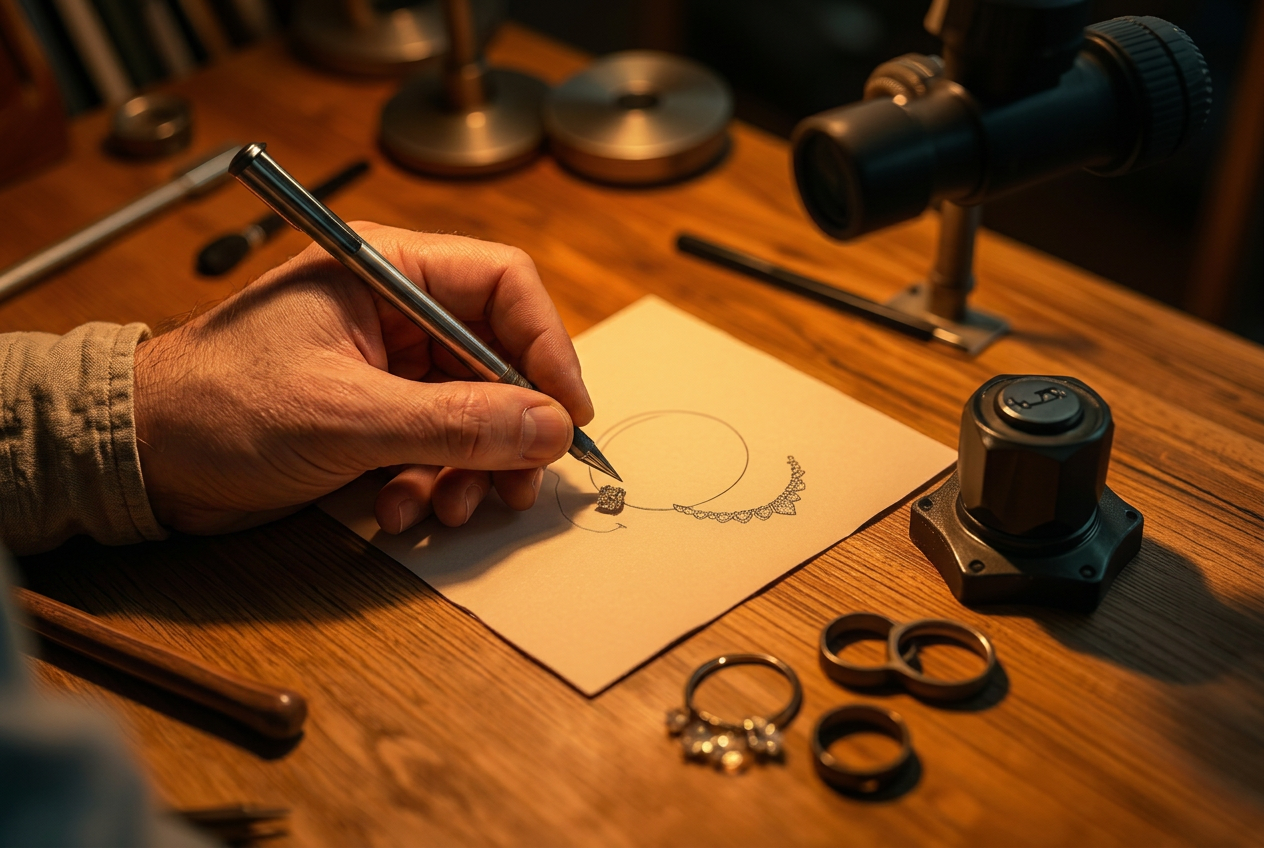
We sketch options around the size and shape of your pair, then produce a 3D rendering so you see the piece before we cut metal.
III
Cleaning and prep
Ivories are gently cleaned and shaped in house. We never over polish: the natural color and character stay intact.
IV
Setting and finishing
Our goldsmiths set the ivory, finish the metal, and hand the piece back to you with care instructions.
Elk ivory questions we hear most
What is elk ivory?
Elk ivory refers to the two upper canine teeth, often called ivories or buglers, found only in elk. They are true ivory, and no two pairs are shaped or colored the same way.
Can you set my own ivories?
Yes. Bring them to Missoula or Kalispell and our in house goldsmiths will clean, shape, and set them into a design built around your pair.
How long does it take?
Most commissions run four to six weeks from approved design to finished piece, depending on metal and accent stones.
Is it legal?
Elk ivory from a legally harvested animal is legal to own and set in jewelry in the United States. It is not covered by the restrictions that apply to elephant ivory.